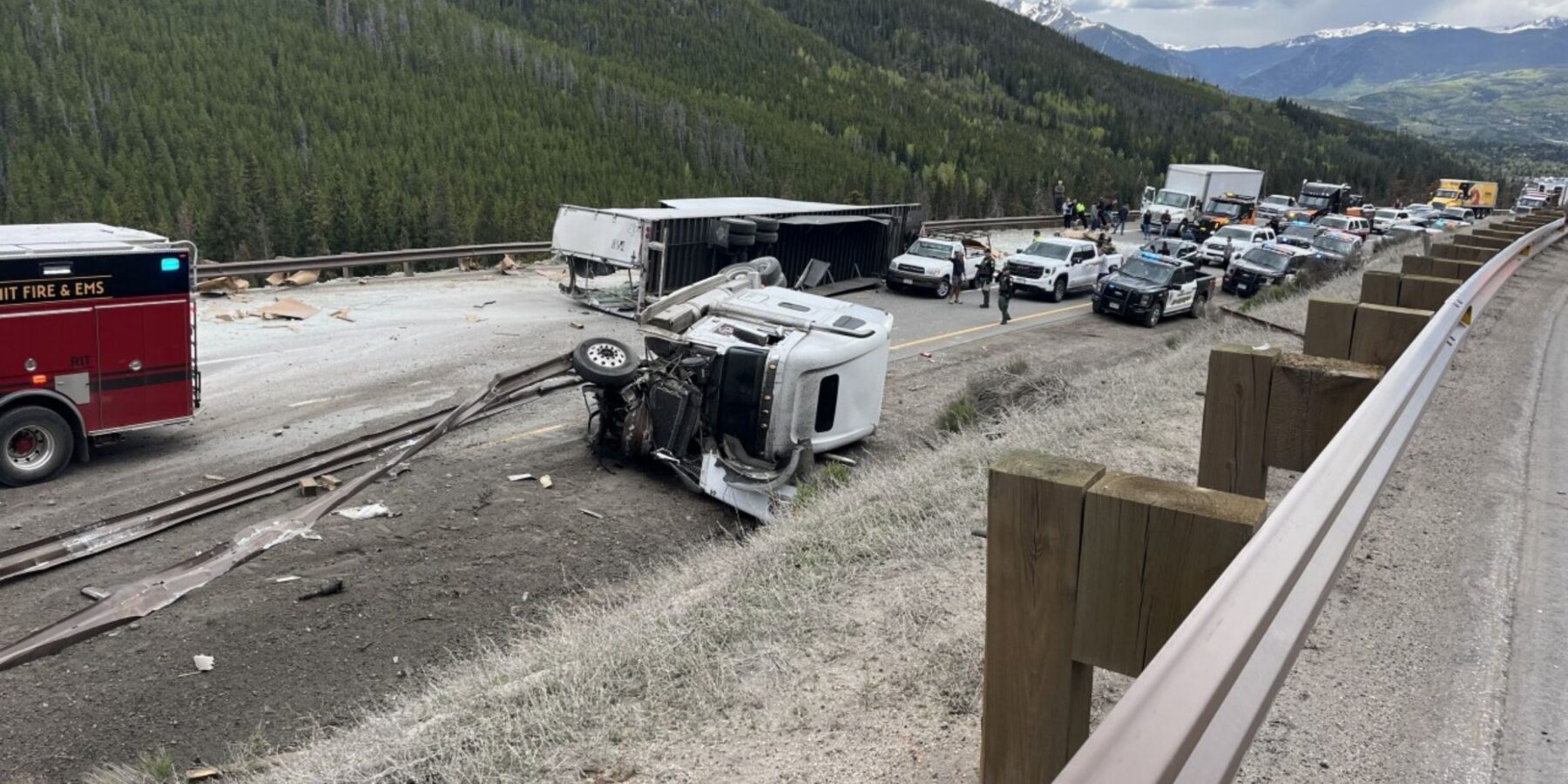
What to Know About the June 4 Denver Truck Accident on I-70
On June 4, 2025, a violent truck accident near Denver along Interstate 70 left five people injured, including one person in critical condition. According to Denver7 News, a semi-truck driver was cited for careless driving after colliding with multiple vehicles in a chain-reaction crash during heavy traffic. The incident brought eastbound traffic to a halt in one of Colorado’s most heavily traveled mountain corridors, drawing immediate attention to the risks posed by large commercial vehicles navigating steep grades and congested mountain passes.
This devastating event highlights the ongoing danger that truck crashes pose on Colorado highways, especially in areas like the Eisenhower Tunnel, where high elevation, sharp curves, and unpredictable weather often lead to disaster. Victims of truck accidents in Denver and across the state face immense challenges, from emergency medical treatment and long-term recovery to insurance disputes and legal uncertainty.
If you or a loved one were injured in a Denver truck accident, you are not alone. At the Law Office of Jordan S. Levine, we help injury victims pursue justice and recover the compensation they need to rebuild their lives. Our team is here to guide you through every step of the legal process with compassion, skill, and unwavering commitment.
Call (303) 835-4910 or contact us through our secure online form to schedule your free consultation. You don’t pay anything unless we win your case.
Details About the June 4 Denver Truck Accident Near the Eisenhower Tunnel
The June 4, 2025, semi-truck crash on Interstate 70 near the Eisenhower Tunnel is a grim reminder of the dangers that commercial vehicles pose on Colorado’s mountain highways. Occurring in the eastbound lanes during the early afternoon, the collision resulted in serious injuries for five people, including one individual who was transported to the hospital in critical condition. Emergency responders closed I-70 temporarily as crews worked to clear the wreckage and investigate the cause of the crash.
Where the Crash Happened on I-70
The accident occurred just east of the Eisenhower–Johnson Memorial Tunnel, a notorious stretch of I-70 that sits at over 11,000 feet in elevation. This corridor is one of the busiest and most hazardous parts of Colorado’s interstate system. The steep downgrades, tight curves, and unpredictable weather near the tunnel make it a hotspot for runaway truck incidents and multi-vehicle pileups.
The tunnel is part of a critical freight route between the Front Range and the Western Slope, and it regularly sees heavy commercial traffic. According to the Colorado Department of Transportation (CDOT), steep grades leading into the tunnel require truckers to use low gears and maintain controlled speeds to prevent brake failure. For real-time safety updates and traveler alerts, CDOT’s COtrip I-70 travel alerts provide important information for motorists and truck drivers alike.
What Caused the Crash
According to Denver7 News, the truck driver was cited for careless driving. The semi reportedly struck multiple vehicles in a chain-reaction crash as it approached a congested traffic zone. Investigators have not released further details about whether mechanical failure, driver fatigue, or weather played a role in the collision.
Although full investigative findings are pending, initial reports suggest that speed and driver error were contributing factors. The Federal Motor Carrier Safety Administration (FMCSA) emphasizes the importance of using proper braking techniques when descending steep grades to avoid overheating and loss of vehicle control. The agency’s Brake Safety resources outline common violations and maintenance failures that often contribute to runaway truck incidents.
Injuries and Emergency Response
Five individuals were injured in the crash, including one victim who suffered critical injuries and required immediate airlift evacuation. The identities of the victims have not been publicly released, but emergency responders from the Colorado State Patrol and Summit Fire & EMS quickly arrived on the scene to triage the injured and direct traffic.
Local hospitals, including St. Anthony Summit Medical Center in Frisco, often receive trauma patients from crashes on I-70. High-elevation crashes present unique challenges for rescue teams due to limited access points and rapidly changing weather. For more information on emergency response coordination in Colorado mountain corridors, visit the Colorado Division of Homeland Security and Emergency Management.
What to Know About the Dangers Truck Drivers Face at the Eisenhower Tunnel
Truck drivers navigating eastbound Interstate 70 through the Eisenhower Tunnel face one of the most dangerous stretches of highway in Colorado. The combination of high elevation, steep grades, unpredictable mountain weather, and congested traffic creates ideal conditions for devastating truck accidents. The June 4 Denver truck accident is just the latest in a long line of catastrophic crashes that highlight why this corridor remains a serious threat for commercial vehicle operators and everyday drivers alike.
Steep Descents Make Brake Failure a Leading Cause of Truck Accidents
The Eisenhower–Johnson Memorial Tunnel sits at over 11,000 feet above sea level, making it the highest vehicular tunnel in North America. Eastbound I-70 descends sharply after the tunnel, with a nearly 7% grade stretching for more than seven miles. For fully loaded semi-trucks, this descent puts extreme pressure on braking systems.
Brake Fade and Runaway Trucks on I-70
Brake fade occurs when friction causes a truck’s brake system to overheat, reducing its stopping power or rendering it useless altogether. The Federal Motor Carrier Safety Administration (FMCSA) reports that brake problems are one of the most frequently cited violations during roadside inspections. The FMCSA’s Brake Safety Week inspections routinely find that over 10% of inspected trucks are placed out of service due to brake issues.
Colorado has attempted to mitigate this danger by installing runaway truck ramps along I-70, including a critical ramp near mile marker 209. These escape lanes are vital safety features designed to stop trucks that have lost braking ability. However, when truck drivers fail to recognize brake fade early or delay using a ramp, the consequences are often catastrophic. For detailed safety resources, CDOT’s Mountain Rules program provides training for navigating steep Colorado passes safely.
Mountain Weather Increases Risk for Truck Drivers Year-Round
Weather conditions around the Eisenhower Tunnel are some of the most volatile in the state. Sudden snow squalls, black ice, and low visibility can appear with little warning, even in late spring or early summer. For truckers, who already struggle with long stopping distances and heavy loads, mountain weather can make safe navigation nearly impossible.
Sudden Storms and Ice Hazards at High Altitude
The National Weather Service warns that high-elevation corridors like I-70 are particularly vulnerable to fast-moving storm systems. Temperatures can plummet in minutes, turning slush into slick black ice. Snowmelt during the day often refreezes at night, coating downhill grades with nearly invisible sheets of ice. The NWS winter driving safety guide outlines best practices for all motorists, but commercial drivers face exponentially greater challenges due to their vehicle size and weight.
Colorado requires commercial drivers to carry tire chains during winter months and activate them when posted. However, out-of-state drivers unfamiliar with Colorado’s chain laws may be caught off guard. Violations of the chain law not only result in citations but also increase the risk of jackknife and rollover crashes in high-risk zones like Loveland Pass and the tunnel approaches.
Traffic Congestion Contributes to Chain-Reaction Collisions
I-70 is one of the busiest highways in the Western United States, carrying tens of thousands of vehicles daily between Denver and mountain destinations. During weekends, holidays, and ski season, traffic often slows to a crawl in the areas leading up to and just past the Eisenhower Tunnel. This creates dangerous conditions for truck drivers who cannot stop or slow down as quickly as smaller vehicles.
Stop-and-Go Traffic Increases Rear-End Crash Risk
Heavy traffic near Silverthorne and Frisco often backs up quickly, catching truck drivers off guard as they descend steep grades. When trucks are following too closely or fail to brake in time, rear-end crashes and multi-vehicle pileups become unavoidable. The National Highway Traffic Safety Administration (NHTSA) emphasizes the importance of maintaining safe following distances to prevent high-speed collisions, especially in mixed-traffic zones.
Inconsistent Speeds and Sudden Lane Merging
Another issue is the inconsistent flow of traffic near merge points and on-ramps leading into the eastbound descent. Passenger vehicles often change lanes without warning, cutting off trucks that are already straining their brakes. In these moments, truck drivers may be forced to choose between colliding with a merging vehicle or swerving, which can result in a rollover or sideswipe crash. These types of maneuvers are especially dangerous in narrow lanes with minimal shoulder space, a common feature of mountain infrastructure.
CDOT’s I-70 Mountain Express Lane was designed to alleviate some congestion, but it has not eliminated the risk entirely, particularly for heavy trucks navigating traffic flow during peak travel times.
Truck Driver Fatigue Is Common on Long-Haul Routes Through Colorado
Many truck drivers entering the Denver metro area have been on the road for hours or even days before reaching the Eisenhower Tunnel. Fatigue is a silent but deadly factor in many truck crashes and often plays a role in high-speed wrecks on steep mountain grades.
Drowsy Driving Impairs Reaction Time
The Centers for Disease Control and Prevention (CDC) notes that driving after 18 hours without rest impairs judgment as severely as driving with a blood alcohol content of 0.05%. After 24 hours, impairment rivals drunk driving. The CDC’s drowsy driving report warns that truckers are especially vulnerable due to irregular schedules and long-haul routes.
Colorado’s I-70 corridor is part of the national freight network, and many drivers traveling through the Eisenhower Tunnel are headed to distribution centers in Denver or farther east. Despite FMCSA’s Hours of Service regulations, violations remain common, often driven by carrier pressure to meet deadlines. Fatigued truckers are more likely to misjudge speed, delay braking, or fall asleep behind the wheel, leading to deadly crashes.
Limited Rest Areas in Mountain Regions
One overlooked factor contributing to fatigue is the lack of safe, accessible rest areas along Colorado’s high-elevation routes. In contrast to flatter regions, mountain highways offer limited space for pull-offs, truck parking, or full-service rest stops. This often forces drivers to push through fatigue in search of a safe place to stop or to risk illegal parking in unsafe zones.
The Federal Highway Administration (FHWA) has identified rest area shortages as a national safety concern. In the Colorado Rockies, the scarcity is particularly acute, and it has direct consequences for drivers descending through dangerous terrain while physically and mentally exhausted.
Outdated Infrastructure Exacerbates Truck Accident Risks
While the Eisenhower Tunnel was an engineering marvel when it opened in the 1970s, much of the surrounding infrastructure has not kept pace with the growing volume and size of today’s commercial vehicles. Narrow shoulders, tight curve radii, and outdated signage all contribute to a dangerous driving environment.
Inadequate Lane Widths and Minimal Escape Routes
Large trucks require more space to maneuver safely. Unfortunately, sections of I-70 surrounding the Eisenhower Tunnel were designed before modern freight standards were established. The result is narrow lanes with little margin for error, especially in snow, rain, or heavy fog. If a truck drifts even slightly outside its lane, it can easily sideswipe another vehicle or hit a guardrail, triggering a chain reaction crash.
Emergency escape options are also limited. In the event of mechanical failure or driver error, trucks have few places to pull off safely. This lack of redundancy is a significant liability during major crashes, as it complicates access for emergency vehicles and delays medical response.
Delayed Improvements and Long-Term Planning
While the Colorado Department of Transportation has proposed major infrastructure upgrades in its Ten-Year Vision Plan, many of the most urgently needed improvements near the Eisenhower Tunnel remain unfunded or still in the planning phase. Until those changes are implemented, drivers are left to navigate an aging system that is ill-equipped to handle 80,000-pound trucks on steep, congested mountain roads.
Injuries Commonly Sustained in a Denver Truck Accident on I-70
A Denver truck accident on Interstate 70 near the Eisenhower Tunnel often results in devastating, life-altering injuries. When a fully loaded semi-truck weighing up to 80,000 pounds collides with a passenger vehicle or multiple vehicles in a chain-reaction crash, the human body absorbs a level of force it was never designed to withstand. Victims frequently face months or years of medical treatment, chronic pain, emotional trauma, and financial uncertainty. Understanding the types of injuries common in truck accidents is essential for recognizing the long-term consequences and pursuing full legal compensation.
Traumatic Brain Injuries Are a Leading Concern in High-Speed Truck Collisions
One of the most severe outcomes of a truck crash is a traumatic brain injury (TBI). These injuries often occur when a passenger strikes their head on a window, dashboard, or pavement after being ejected or tossed around inside a vehicle.
Concussions and Mild TBIs
Concussions, the most common type of brain injury, can cause lasting symptoms like headaches, memory loss, blurred vision, and sensitivity to light. Even mild TBIs can significantly impair a person’s ability to work, drive, or manage daily tasks. The Centers for Disease Control and Prevention (CDC) emphasizes that symptoms may not appear immediately and can worsen over time.
Severe Brain Trauma and Long-Term Disability
In high-impact truck accidents, more serious injuries such as brain hemorrhaging, diffuse axonal injury, or skull fractures may occur. These conditions often require emergency surgery and may leave victims with permanent cognitive impairment, emotional instability, or physical disability. Rehabilitation can last months or even years. For deeper insights into brain trauma care, the Brain Injury Association of America provides valuable education and support resources.
Spinal Cord Injuries and Back Trauma Are Common in Truck Crash Victims
Truck collisions subject victims to violent motion and crushing forces, often resulting in neck and back injuries. When spinal discs are compressed or vertebrae are fractured, the consequences can be debilitating.
Herniated Discs and Spinal Compression
Herniated discs are common in rear-end truck collisions where the spine is violently jolted. Victims may experience radiating pain, numbness, and limited mobility, especially in the arms or legs. The Cleveland Clinic outlines how disc injuries are treated with a combination of physical therapy, medication, and, in some cases, spinal surgery.
Paralysis and Permanent Loss of Function
When the spinal cord is severed or severely damaged, paralysis can occur. Victims may lose function in their lower limbs (paraplegia) or all four limbs (quadriplegia), depending on the level of injury. These are life-changing injuries that require assistive technology, home modifications, and lifelong care. The Christopher & Dana Reeve Foundation offers in-depth guidance and advocacy for spinal cord injury survivors.
Bone Fractures and Orthopedic Injuries Are Nearly Inevitable in Truck Accidents
The sheer force of a Denver truck accident often causes multiple bone fractures. Victims may suffer from broken arms, legs, ribs, or pelvises due to blunt-force trauma, crushing injuries, or being thrown from the vehicle.
Arm, Wrist, and Shoulder Fractures
Victims instinctively brace themselves during a collision, often resulting in broken wrists, fractured arms, or dislocated shoulders. These injuries can require plates, screws, and extended rehabilitation. The American Academy of Orthopaedic Surgeons (AAOS) provides detailed patient education on common upper extremity fracture care.
Leg and Pelvic Fractures
Side-impact or rollover crashes frequently result in lower-body trauma. Pelvic fractures are among the most serious and can cause internal bleeding or nerve damage. Recovery may include surgery and months of physical therapy. For more about pelvic fracture recovery, the National Institutes of Health (NIH) provides clinical insights and case studies.
Internal Organ Damage Is a Hidden but Life-Threatening Injury
While some injuries are immediately visible, others, like internal organ damage, may not be apparent right away. However, they are often the most life-threatening in the hours after a collision.
Abdominal Trauma and Internal Bleeding
Blunt force to the torso during a crash can damage the spleen, liver, or kidneys. Victims may report abdominal pain, dizziness, or visible bruising. Without rapid intervention, internal bleeding can lead to shock and death. The National Library of Medicine outlines emergency protocols for managing blunt abdominal trauma.
Rib Fractures and Lung Injuries
Broken ribs are common when victims slam into seatbelts or airbags. Fractures can puncture the lungs, causing pneumothorax (collapsed lung) or hemothorax (blood in the chest cavity). These injuries often require hospitalization and oxygen support. Mayo Clinic’s chest trauma guide explains how these conditions are treated.
Emotional and Psychological Trauma Should Not Be Overlooked
The aftermath of a truck crash doesn’t end with physical injuries. Many victims experience profound psychological effects that interfere with daily life long after physical wounds heal.
Post-Traumatic Stress Disorder (PTSD)
PTSD is common in survivors of violent collisions. Victims may experience flashbacks, nightmares, panic attacks, and a fear of driving or even riding in vehicles. The American Psychological Association (APA) emphasizes the importance of early intervention and therapy in addressing post-crash mental health conditions.
Depression and Anxiety Following a Crash
Chronic pain, loss of mobility, or disfigurement can lead to major depression or generalized anxiety. These emotional injuries may qualify for compensation in a truck accident claim, especially when supported by medical documentation and mental health records. The National Alliance on Mental Illness (NAMI) offers support for individuals coping with trauma-induced mental health struggles.
Who May Be Liable for a Denver Truck Accident Near the Eisenhower Tunnel
Liability in a Denver truck accident near the Eisenhower Tunnel can be far more complex than it is in standard car collisions. When a semi-truck crashes on Interstate 70, multiple parties may bear legal responsibility, including the truck driver, their employer, maintenance providers, cargo loaders, or even government agencies. Determining fault requires an in-depth investigation of driver behavior, mechanical conditions, federal regulation compliance, and roadway safety.
At the Law Office of Jordan S. Levine, we conduct comprehensive investigations into every truck accident claim to uncover all sources of liability. Establishing negligence is the cornerstone of securing full compensation for injured victims and families who are left dealing with catastrophic losses after a major truck crash.
The Truck Driver Is Often the First Party Investigated for Negligence
In most Denver truck accident cases, the driver is the first point of legal scrutiny. Commercial drivers are held to a higher standard of care than typical motorists due to the size, weight, and destructive potential of their vehicles.
Driver Error and Unsafe Behaviors
Truck drivers descending from the Eisenhower Tunnel must reduce speed and maintain control on steep grades. When drivers fail to shift into a lower gear, follow braking procedures, or observe weather warnings, they can be held liable for resulting crashes. Speeding, distracted driving, and fatigue are leading causes of truck crashes across Colorado.
The National Highway Traffic Safety Administration (NHTSA) identifies driver error as the primary cause in more than 80% of large truck crashes involving injury or death. Errors include misjudging stopping distances, tailgating, unsafe lane changes, or falling asleep behind the wheel.
Distracted Driving and Device Use
Commercial drivers must follow federal regulations that prohibit texting or using handheld mobile devices while operating a commercial motor vehicle. Despite these rules, distracted driving remains a serious concern. The Federal Motor Carrier Safety Administration (FMCSA) warns that truckers who text behind the wheel are 23 times more likely to cause a crash.
When distraction plays a role in a collision, such as checking a GPS app or adjusting in-cab technology while navigating the steep descents near Silverthorne, the driver can be held accountable for any resulting harm.
Trucking Companies May Be Vicariously or Directly Liable
Even when a driver is clearly at fault, the company that employs them or contracts with them may also bear responsibility. Under a legal doctrine known as respondeat superior, employers can be held liable for the actions of their employees while on the job.
Negligent Hiring and Training Practices
Trucking companies are responsible for screening, training, and supervising the drivers they put on the road. When they hire drivers with poor safety records, insufficient mountain driving experience, or histories of DUI violations, they can be sued for negligent hiring. The FMCSA’s Driver Qualification File regulations require motor carriers to verify a driver’s safety history, license status, and drug testing compliance, yet many companies fail to meet this standard.
Pushing Drivers to Violate Federal Hours of Service Rules
Some carriers pressure drivers to exceed legal hours of service (HOS) to meet unrealistic delivery schedules. When this happens, both the driver and the employer may be found liable. The FMCSA outlines strict HOS rules designed to prevent fatigue-related crashes. A carrier’s violation of these rules can serve as compelling evidence of negligence in a personal injury lawsuit.
Vehicle Maintenance Providers May Be Liable for Equipment Failure
Trucking companies are required by federal law to ensure that all vehicles in their fleet are properly inspected and maintained. If poor maintenance contributes to a crash, such as worn-out brake pads, bald tires, or faulty steering systems, the maintenance provider may also face legal consequences.
Brake Failure and Mechanical Negligence
Brake system failures are a leading cause of Denver truck accidents on mountain grades. According to the Commercial Vehicle Safety Alliance (CVSA), thousands of trucks fail inspection during Brake Safety Week each year. When a truck’s braking system is inadequately maintained, liability may rest with the carrier, their contracted maintenance shop, or a negligent third-party inspector.
Detailed maintenance logs, repair receipts, and inspection reports are often critical in proving whether a mechanical defect played a role in a crash near the Eisenhower Tunnel.
Cargo Loading Companies May Contribute to Crash Liability
Improper cargo loading can shift a truck’s center of gravity, increase stopping distances, or cause the vehicle to jackknife. In a high-altitude, curved corridor like I-70 east of the tunnel, an unbalanced trailer dramatically increases the risk of rollover or loss of control.
Overloaded or Unevenly Distributed Freight
The FMCSA’s Cargo Securement Rules mandate that all freight be safely secured, evenly distributed, and properly documented. When freight handlers exceed weight limits or fail to balance cargo, they can be held liable for any accidents that result.
Many commercial carriers subcontract cargo loading to third-party logistics firms. If a crash investigation reveals that poor loading contributed to a Denver truck accident, the cargo company may be added as a co-defendant in the legal claim.
Manufacturers May Be Liable for Defective Truck Parts
Sometimes, the root cause of a truck crash lies in the failure of a critical vehicle component, such as brakes, tires, or steering mechanisms. In these cases, the manufacturer of the defective part may face strict product liability under Colorado law.
Design and Manufacturing Defects
If a crash results from a defect in how the vehicle or its components were designed, manufactured, or labeled, the company responsible for that part may be sued. For example, if a brake line ruptures due to a hidden design flaw, the part’s manufacturer may be held accountable.
The National Highway Traffic Safety Administration’s recall database tracks known truck component recalls. Plaintiffs’ attorneys often rely on this database to support claims against vehicle manufacturers and suppliers in truck accident litigation.
Government Agencies May Share Liability for Unsafe Road Conditions
In some cases, the state or federal government or its contractors may share fault for a crash. Road maintenance failures, poor signage, malfunctioning traffic control devices, or dangerously designed infrastructure may all contribute to liability.
Poor Road Design or Maintenance on I-70
Eastbound I-70 near the Eisenhower Tunnel features long downgrades, inconsistent shoulder widths, and limited emergency escape options. If a crash occurs because signage was obscured, road markings were faded, or the runaway truck ramp was blocked or inaccessible, the Colorado Department of Transportation (CDOT) or a contracted construction firm may be held liable.
Claims against public agencies must follow strict notice and filing procedures under the Colorado Governmental Immunity Act (CGIA). Victims typically have just 182 days from the date of injury to file a notice of claim. Failure to act within that timeframe can result in losing the right to pursue compensation altogether.
What to Do After a Denver Truck Accident on I-70 Near the Eisenhower Tunnel
The moments after a Denver truck accident near the Eisenhower Tunnel are chaotic and terrifying. Victims are often injured, disoriented, and unsure of what to do next. In high-elevation collisions involving commercial trucks, immediate actions taken at the scene and in the days that follow can significantly impact a victim’s physical recovery, legal rights, and financial future.
If you or someone you love has been involved in a serious truck crash on Interstate 70, knowing how to protect yourself is essential. Below are the most critical steps to take following a semi-truck accident, especially in the unique terrain and traffic environment near the Eisenhower Tunnel.
Call 911 and Request Immediate Emergency Assistance
The first and most urgent step is to dial 911 and report the crash. Even if you believe your injuries are minor, it’s essential to get law enforcement and paramedics to the scene right away.
Why Immediate Medical Response Is Critical
Semi-truck crashes often result in internal bleeding, traumatic brain injuries, or spinal cord trauma injuries that may not show symptoms right away but can become life-threatening if untreated. Paramedics are trained to triage at the scene, stabilize victims, and transport them to nearby trauma centers like St. Anthony Summit Medical Center in Frisco or Vail Health Hospital for advanced care.
The Colorado Department of Public Health & Environment recommends that all injury victims receive evaluation from trained EMS personnel following a high-impact crash. Delaying treatment can not only worsen your condition but also harm your injury claim, as insurance adjusters often argue that delayed care means the injuries were not serious.
Cooperate with Law Enforcement and Request a Copy of the Crash Report
When law enforcement arrives, remain calm and answer their questions honestly. The responding officer, often from the Colorado State Patrol or Summit County Sheriff’s Office, will document the scene and complete an official accident report.
Crash Reports Help Prove Liability
The crash report typically includes driver statements, witness information, weather and road conditions, and any traffic citations issued. This document becomes critical evidence in your personal injury claim. You can request a copy of your report from the Colorado State Patrol Central Records Unit or through your attorney.
If you are too injured to speak to officers at the scene, make sure to provide a full statement later with legal counsel present. The accuracy of this report can greatly influence the outcome of your case.
Document the Scene If You Are Physically Able
If you are not seriously injured or if someone with you can assist, gather as much evidence as possible at the scene. The moments immediately after a crash are often the only opportunity to preserve certain types of visual and physical evidence.
Take Photographs and Videos
Use your phone to document the vehicles involved, license plates, road conditions, skid marks, guardrails, signage, and any visible injuries. Capture the condition of the semi-truck and any identifying company logos or USDOT numbers. According to the National Safety Council (NSC), visual evidence plays a critical role in post-accident investigations and can help establish fault and impact severity.
Get Contact Information from Witnesses
If anyone saw the crash or stopped to help, ask for their names and phone numbers. Independent witness statements can help validate your account of the accident and challenge false claims from the trucking company or its insurer. Make note of any businesses or residences nearby that might have security camera footage that captured the incident.
Seek Immediate Medical Attention Even If You Feel “Fine”
It is not uncommon for crash victims to feel okay immediately after the collision, only to develop symptoms later. The adrenaline and shock of a truck accident often mask pain, but internal injuries, whiplash, and brain trauma may worsen with time.
Consistent Medical Records Strengthen Your Case
Visit a hospital, urgent care, or your primary care provider the same day. Follow all recommended treatment plans, attend follow-up appointments, and keep a detailed log of your symptoms and pain levels. The Mayo Clinic and Johns Hopkins Medicine both stress that early intervention is critical in preventing long-term complications from traumatic injuries.
Gaps in medical treatment are a red flag for insurance companies and can result in reduced settlements. Having a consistent and well-documented treatment history reinforces the severity and legitimacy of your injuries.
Do Not Speak with the Trucking Company or Their Insurer Without a Lawyer
Soon after the crash, you may receive calls from the truck driver’s insurance adjuster or even a representative from the trucking company. They may appear helpful, ask for a recorded statement, or offer you a quick settlement.
Insurance Adjusters Are Not on Your Side
Their goal is to protect the company’s bottom line, not to help you recover. Anything you say can be twisted to reduce your compensation or deny your claim altogether. The Colorado Division of Insurance advises victims to avoid making any statements or signing documents without consulting an attorney.
A qualified truck accident lawyer will handle all communications with insurers, protect your legal rights, and ensure you are not taken advantage of during your most vulnerable moments.
Start Collecting Evidence for Your Claim Immediately
Truck accident cases often require detailed evidence to prove liability and damages. You should begin building your case from the day of the crash.
Save Medical Bills, Repair Estimates, and Pay Stubs
Keep a dedicated folder or digital file for all crash-related documents: ER visits, ambulance bills, prescriptions, diagnostic scans, and any correspondence from your insurer or employer. If you miss work due to your injuries, track your lost wages and request letters from your employer confirming time off.
Keep a Pain and Recovery Journal
Document how your injuries affect your daily life, including pain levels, limitations, emotional distress, and sleep disruption. This personal account helps support your claim for non-economic damages such as pain and suffering or PTSD. The American Psychological Association (APA) recommends journaling as a way to process trauma and maintain a record of emotional impact.
Consult a Truck Accident Lawyer as Soon as Possible
Truck accident claims are more complex than ordinary car accident cases. Multiple parties may be liable, federal regulations may apply, and critical evidence can disappear quickly.
Your Lawyer Can Launch a Rapid Investigation
An experienced attorney can send preservation letters to the trucking company demanding that logbooks, black box data, maintenance records, and driver drug test results be preserved. They can also hire accident reconstruction experts, medical consultants, and economic analysts to strengthen your case.
The earlier you involve a legal team, the better your chance of recovering full compensation. Most truck accident attorneys, including the Law Office of Jordan S. Levine, work on a contingency fee basis, which means you pay nothing upfront and nothing unless your case is successful.
Get Legal Help After a Denver Truck Accident on I-70
A serious truck accident near the Eisenhower Tunnel can turn your life upside down in an instant. You may be facing painful injuries, rising medical bills, lost wages, or even the devastating loss of a loved one, all while the trucking company and its insurer work to protect their interests. You don’t have to go through this alone.
At the Law Office of Jordan S. Levine, we fight for victims of truck accidents across Colorado, including those injured on I-70 and in the Denver metro area. Our legal team understands the complexity of these cases, from investigating federal safety violations to securing black box data and proving long-term damages. We’ll handle every aspect of your case so you can focus on healing and rebuilding your life.
We offer free, no-obligation consultations to help you understand your rights. If we take your case, you won’t pay anything unless we win.
Call us today at (303) 835-4910 or contact us through our secure online form to get started. Let us help you take the first step toward justice, recovery, and peace of mind.
Contact usfor a free consultation.
Phone: (303) 951-4810